Clear Aligners vs Braces: Which Is Better in 2026?
Both straighten teeth — but they work differently, cost differently, and suit different people. Here is the complete, unbiased comparison to help you choose the right orthodontic treatment in Bathinda.
Straight teeth are no longer just a cosmetic aspiration — they are a health investment. Properly aligned teeth are easier to clean, function better under biting forces, and contribute to long-term jaw health. In 2026, patients seeking orthodontic treatment in Bathinda have more options than ever before.
The two most popular choices are traditional braces (metal or ceramic) and clear aligners (transparent, removable trays). Each has genuine advantages. Neither is universally "better" — the right choice depends entirely on your specific dental situation, lifestyle, age, and treatment goals.
At Dental Wellness Bathinda, our orthodontic team works with both systems. This guide gives you an honest, complete comparison so you can make an informed decision — or come to your consultation already knowing the right questions to ask.
How Each System Works
Traditional Braces
Metal or ceramic brackets are bonded to the front surface of each tooth and connected by an archwire. The wire applies continuous, controlled pressure to move teeth into their correct positions. The orthodontist adjusts the wire at regular appointments (every 4–6 weeks) to progress the treatment. Braces are fixed — they cannot be removed by the patient during treatment.
Clear Aligners
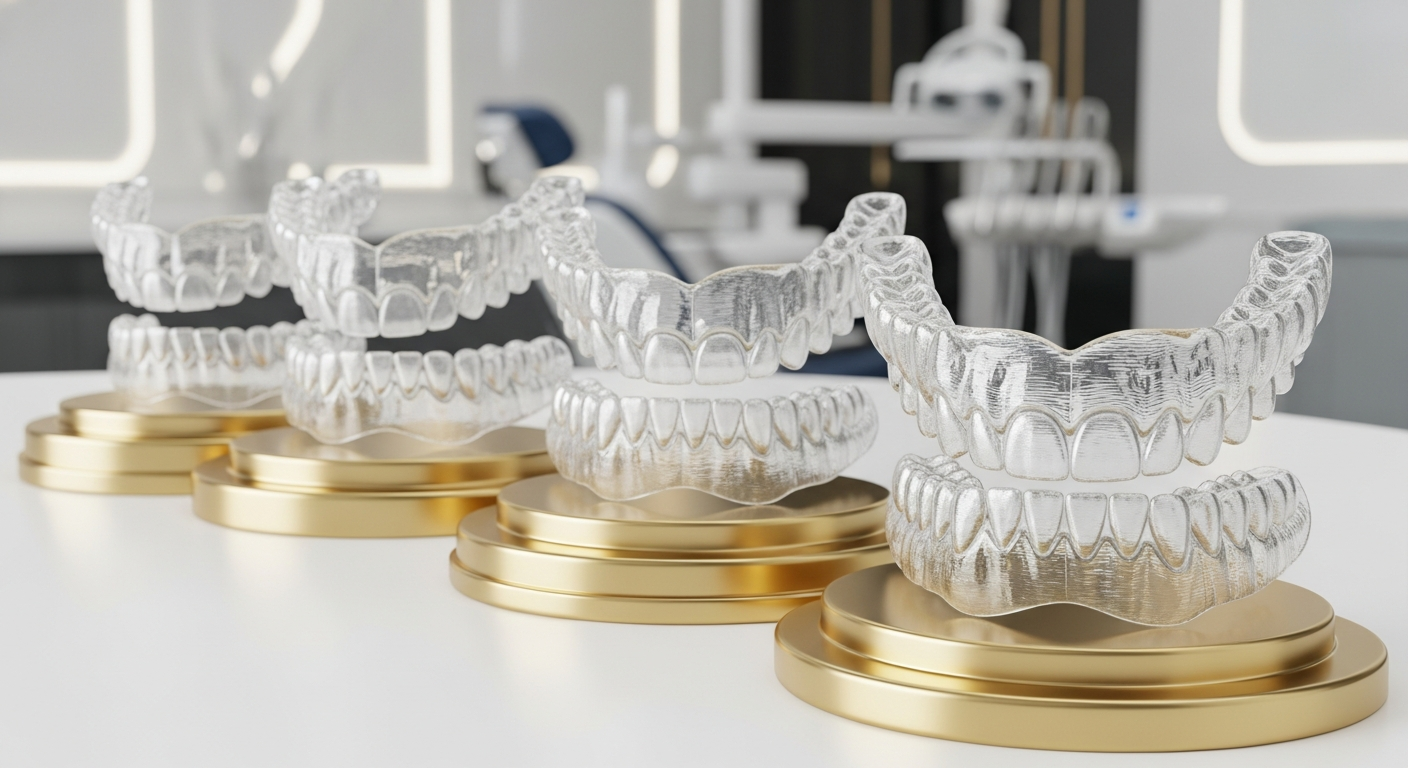
A series of custom-fabricated, transparent plastic trays are worn over the teeth. Each tray is slightly different from the last, applying gentle, precise pressure to move specific teeth incrementally. Trays are changed every 1–2 weeks. Unlike braces, aligners are removable — taken out for eating, drinking anything other than water, and oral hygiene. They must be worn 20–22 hours per day to achieve the intended movement.
Complete Head-to-Head Comparison
| Factor | Clear Aligners | Traditional Braces |
|---|---|---|
| Visibility | ✅ Nearly invisible | ⚠️ Clearly visible (metal) / less visible (ceramic) |
| Removability | ✅ Removable for eating & cleaning | ❌ Fixed throughout treatment |
| Oral Hygiene | ✅ Easier — brush normally | ⚠️ More challenging around brackets |
| Diet Restrictions | ✅ None — remove to eat anything | ❌ Avoid hard, sticky foods |
| Comfort | ✅ Smoother, fewer emergency visits | ⚠️ Initial soreness; wire irritation possible |
| Compliance Required | ⚠️ High — must wear 20–22 hrs/day | ✅ No compliance issue (fixed) |
| Complex Cases | ⚠️ Limited for severe cases | ✅ Best for complex corrections |
| Bite Correction | ⚠️ Moderate effectiveness | ✅ Better for severe bite issues |
| Treatment Duration | ✅ Often shorter for mild/moderate cases | ⚠️ Typically 18–24 months |
| Cost | ⚠️ Generally higher | ✅ Metal braces most affordable |
| Age Suitability | ✅ Best for teens & adults | ✅ Excellent for children, teens & adults |
| Clinic Visits | ✅ Less frequent (every 6–8 weeks) | ⚠️ More frequent (every 4–6 weeks) |
Clear Aligners: Advantages & Limitations
✅ Near-Invisible Appearance
The most significant advantage. Clear aligners are virtually undetectable — essential for working professionals, adults, and anyone who is self-conscious about wearing orthodontic appliances.
✅ Eat What You Want
Simply remove your aligners before meals. No list of forbidden foods — enjoy everything from sticky sweets to hard nuts without fear of bracket damage.
✅ Superior Oral Hygiene
Remove aligners to brush and floss normally. No need for special floss threaders or proxabrushes — maintaining good hygiene during treatment is far easier.
✅ Fewer Emergency Visits
No wires to snap or brackets to debond. Clear aligners have a lower incidence of mid-treatment emergency appointments compared to fixed appliances.
⚠️ Requires Discipline
Must be worn 20–22 hours per day consistently. Patients who forget to replace aligners after meals will significantly slow or compromise their treatment outcomes.
⚠️ Not Ideal for All Cases
Severe crowding, complex bite corrections (Class II/III skeletal malocclusion), and significant vertical problems may still require traditional braces or a combination approach.
Traditional Braces: Advantages & Limitations
✅ Best for Complex Cases
Traditional braces remain the gold standard for severe crowding, significant bite corrections, and skeletal malocclusions. Their three-dimensional control over tooth movement is unmatched.
✅ No Compliance Required
Because they are fixed, treatment progression is consistent regardless of patient behaviour. Ideal for younger patients or anyone concerned about self-discipline with removable appliances.
✅ Most Affordable Option
Metal braces remain the most cost-effective orthodontic option — making comprehensive orthodontic treatment accessible to a wider patient base.
✅ Effective for All Ages
Particularly well-suited for children and young teenagers whose teeth are still developing — braces work in harmony with natural growth patterns.
⚠️ Visible Appearance
Metal brackets and wires are clearly visible. Ceramic brackets reduce visibility but are less durable. For adults, this is often the primary reason to prefer aligners.
⚠️ Dietary Restrictions
Hard foods (nuts, raw carrots, crusty bread), sticky foods (toffee, gummy sweets), and chewy foods risk breaking brackets or bending wires during treatment.
Who Should Choose Clear Aligners?
- Working professionals and adults who cannot have visible metal appliances
- Patients with mild to moderate crowding, spacing, or relapse after previous braces
- Patients who prioritise oral hygiene ease during treatment
- Brides and grooms preparing for a wedding within the treatment timeline
- Athletes and musicians who find fixed appliances uncomfortable or risky
- Anyone willing to maintain the required 20–22 hours daily wear
Who Should Choose Braces?
- Children and young teenagers (especially under 14) with developing jaws
- Patients with severe crowding, significant overbite, underbite, or crossbite
- Anyone who may not maintain consistent aligner wear
- Patients with multiple extractions required as part of orthodontic planning
- Cases requiring significant vertical or rotational tooth movements
- Patients for whom cost is a primary consideration (metal braces are least expensive)
Types of Braces Available at Dental Wellness Bathinda
1. Metal Braces
The tried-and-tested classic. High-grade stainless steel brackets and archwires. Most affordable, most durable, and effective for all case types. Modern metal brackets are smaller and more comfortable than older designs. Popular coloured elastic ties make them more personalised for children and teens.
2. Ceramic Braces
Tooth-coloured ceramic brackets that blend with the natural tooth colour — significantly less visible than metal. Equally effective as metal braces. Slightly more expensive and require a little more care to avoid staining the elastic ties.
3. Self-Ligating Braces
Use a built-in clip mechanism instead of elastic ties to hold the archwire — reducing friction on teeth and potentially speeding up treatment. Require fewer adjustments and some patients find them more comfortable than conventional brackets.
4. Clear Aligners (Invisible Aligners)
Custom-fabricated transparent trays using digital scanning and 3D printing technology. We use premium aligner brands with proven clinical track records for predictable, efficient tooth movement. The number of trays varies from as few as 14 (for simple cases) to 40+ for comprehensive treatment.
Retention: The Step Everyone Forgets
Whichever treatment you choose, retention after orthodontics is non-negotiable. Teeth naturally tend to drift back toward their original positions — a phenomenon called relapse. Without proper retention, months or years of treatment can be partially or fully undone.
At Dental Wellness Bathinda, every orthodontic treatment — whether braces or aligners — includes a comprehensive retention plan:
- Removable retainers: Clear retainers worn nightly after treatment — indefinitely, or as guided by your orthodontist.
- Fixed retainers: A thin wire bonded to the inside surface of front teeth for permanent, maintenance-free retention.
🏆 Our Verdict for 2026
If you are an adult or teenager concerned about appearance and can maintain consistent wear — clear aligners are an excellent choice for mild to moderate cases. If you need comprehensive correction, have a complex bite issue, or are a child/young teenager — braces (metal or ceramic) remain the gold standard. In many cases our orthodontists recommend a combination approach. The best answer always comes from a personalised consultation and digital treatment simulation — which we provide at Dental Wellness Bathinda.
✨ Conclusion
The clear aligners vs braces debate does not have one universal answer — it has the right answer for you. Both systems work. Both are backed by decades of clinical evidence. The difference lies in your specific dental needs, lifestyle, age, and priorities.
At Dental Wellness Bathinda, our orthodontic team uses digital scanning and 3D treatment simulation so you can see your expected results before committing to any treatment. We provide honest recommendations based on what will actually work best for your case — not what is most convenient to provide.
A straighter, healthier smile is one consultation away. Book yours today.
❓ Frequently Asked Questions
For mild to moderate cases, yes. For severe bite corrections and complex movements, traditional braces still hold an advantage.
Typically 12–18 months for moderate cases. Simple cases may finish in 6–9 months.
Clear aligners generally cost more than metal braces. Contact us for current pricing tailored to your specific case.
Absolutely. There is no upper age limit. Clear aligners are especially popular with adults for their invisible appearance.
Mild pressure when switching to a new tray, typically for 2–3 days. Generally milder than braces tightening appointments.
Treatment slows significantly and may require additional trays. Aligners must be worn 20–22 hours daily for the planned result.