Oral Cancer Symptoms: Early Signs You Should Never Ignore
India accounts for nearly 30% of global oral cancer cases. The difference between survival and loss is almost always early detection. Here is what to watch for — and when to act immediately.
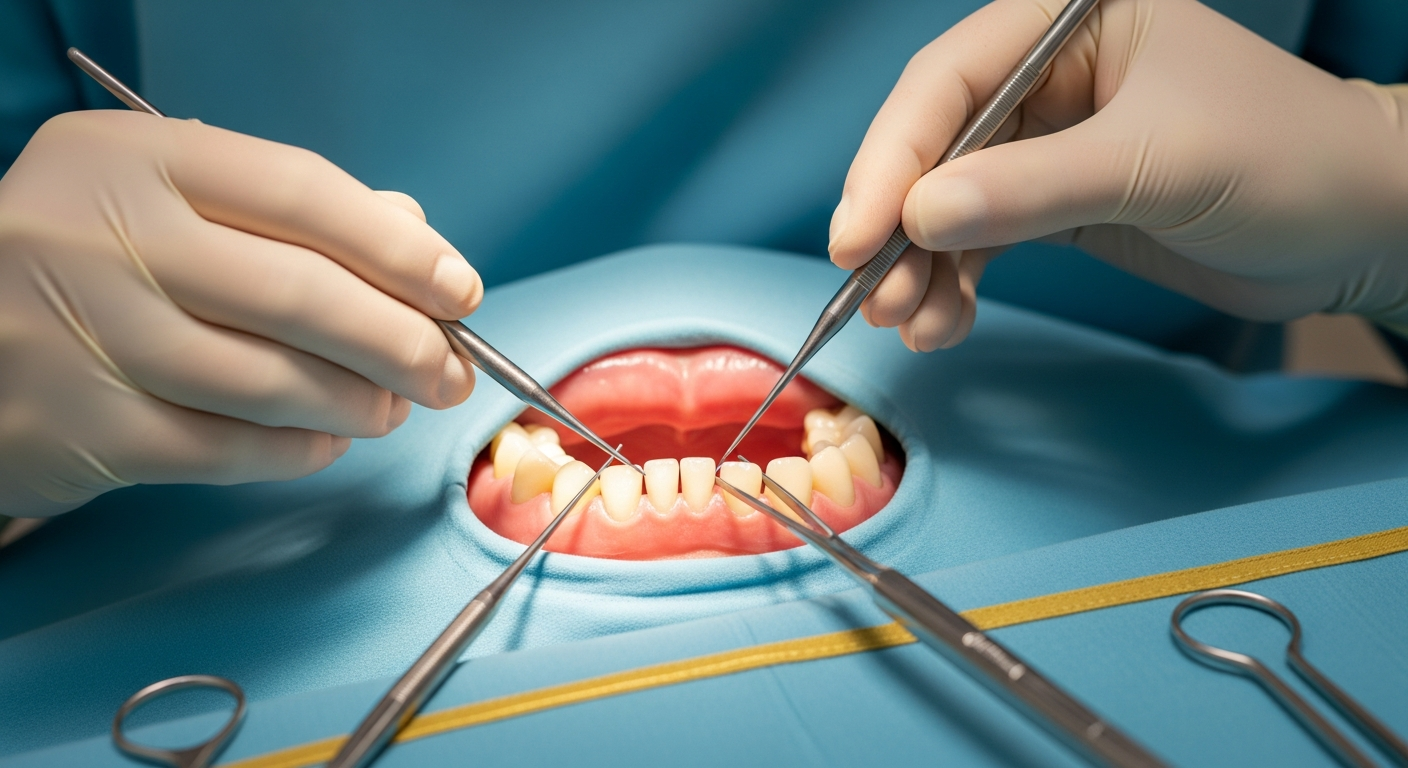
Oral cancer — cancer affecting the lips, tongue, cheeks, floor of the mouth, hard and soft palate, sinuses, and throat — is one of the most serious public health challenges in India. Every year, approximately 77,000 new cases of oral cancer are diagnosed in India alone, making it one of the leading cancers in the country.
Yet oral cancer has one of the starkest gaps between early-stage and late-stage survival rates of any cancer type. Detected at Stage I, the five-year survival rate is 75–90%. By Stage IV, it drops below 40%. The tragedy is that most early-stage oral cancers are easily visible, painless, and entirely detectable — if people know what to look for.
This guide from Dental Wellness Bathinda is intended to give every patient the knowledge to recognise early warning signs and act promptly — because when it comes to oral cancer, timely action saves lives.
The Oral Cancer Situation in India
India has the unfortunate distinction of having one of the highest oral cancer burdens in the world — driven primarily by widespread use of tobacco in all forms, betel nut (supari), gutka, paan, and khaini. Punjab, with its significant tobacco habits, is not exempt from this burden.
Despite these alarming figures, oral cancer remains dramatically under-screened. The majority of cases in India are diagnosed at Stage III or IV — when treatment is most aggressive, most costly, and least successful. Regular dental visits with routine oral cancer screening are one of the most powerful tools available for early detection.
10 Early Signs of Oral Cancer You Must Never Ignore
1. Non-Healing Mouth Sore
A sore or ulcer anywhere in the mouth that does not heal within 2–3 weeks. Normal canker sores resolve in 7–14 days. A persistent ulcer that does not heal is the most common and critical early sign of oral cancer.
2. White Patches (Leukoplakia)
Thick white patches on the gums, tongue, inner cheeks, or floor of the mouth that cannot be wiped away. Leukoplakia is a precancerous condition — approximately 5–17% of cases progress to cancer. Must be biopsied for definitive assessment.
3. Red Patches (Erythroplakia)
Bright red, velvety patches in the mouth carry a higher risk of being malignant than white patches — up to 30–40% of erythroplakia cases are cancerous at biopsy. Any unexplained red patch requires urgent evaluation.
4. A Lump or Thickening
A lump, bump, thickening, rough spot, or hardening anywhere in the mouth, on the lip, on the tongue, or in the neck (swollen lymph node). A persistent lump in the neck that appears without explanation is a classic sign of spread.
5. Unexplained Pain or Numbness
Persistent pain, tenderness, or numbness anywhere in the mouth, lips, face, or tongue — especially without an obvious dental cause — requires investigation. Numbness of the lower lip or chin can indicate nerve involvement.
6. Difficulty Speaking, Chewing, or Swallowing
A progressive difficulty or pain when chewing, swallowing, speaking, or moving the jaw or tongue — particularly when it is worsening over weeks — is a serious warning sign that must be evaluated promptly.
7. Restricted Mouth Opening
Trismus (restricted mouth opening) that develops gradually and is not linked to jaw joint problems or dental infection may indicate a deep tissue lesion. Submucous fibrosis (caused by betel nut use) is both a precancerous condition and a cause of trismus.
8. Loose Teeth Without Obvious Cause
Teeth becoming loose without clear periodontal disease, without trauma, and in the absence of other explanations may indicate that tumour tissue is destroying the bone supporting the teeth.
9. Persistent Sore Throat or Ear Pain
A chronic sore throat or one-sided ear pain that is not associated with a cold or infection, and persists for more than 2–3 weeks, can indicate oropharyngeal cancer — especially when combined with other oral symptoms.
10. Unexplained Weight Loss
Significant, unexplained weight loss alongside any of the above symptoms is a systemic red flag that should prompt immediate medical and dental evaluation. Weight loss in cancer patients is often related to difficulty eating due to oral pain.
Risk Factors for Oral Cancer in India
🚬 Tobacco Use (All Forms)
The dominant risk factor in India. Cigarettes, bidis, cigars, hookah, chewing tobacco, khaini, zarda, gutka, and snuff all significantly increase oral cancer risk. Chewing tobacco particularly affects the cheek and gum lining.
🥜 Betel Nut (Supari) & Paan
Betel nut chewing — with or without tobacco — is independently carcinogenic. It causes oral submucous fibrosis, a precancerous condition that progressively restricts mouth opening and significantly raises cancer risk.
🍺 Heavy Alcohol Consumption
Alcohol acts synergistically with tobacco — the combination of both multiplies oral cancer risk by 15–30 times compared to non-users of either substance.
🦠 HPV Infection
Human Papillomavirus (HPV-16) is a significant and growing cause of oropharyngeal cancers — cancers of the tonsils, throat base, and tongue base — even in non-tobacco users.
☀️ Excessive Sun Exposure
Chronic sun exposure is a major risk factor for lip cancer, particularly the lower lip. Relevant for outdoor workers, farmers, and anyone with prolonged sun exposure without lip protection.
🦷 Poor Oral Hygiene & Chronic Irritation
Chronic irritation from broken teeth, ill-fitting dentures, or poor oral hygiene creates sustained tissue trauma that can accelerate cellular changes in susceptible individuals.
What Is Oral Cancer Screening at the Dentist?
An oral cancer screening performed by a dentist is a thorough, systematic visual and physical examination of all the soft tissues of the mouth — and it takes just a few minutes. Here is what your dentist examines:
- Lips: Inner and outer surfaces for colour changes, sores, lumps
- Cheeks: Inner lining (buccal mucosa) for white/red patches, ulcers, thickening
- Tongue: Top, sides, and undersurface — especially the lateral borders (most common site for tongue cancer)
- Floor of mouth: The area under the tongue for lumps, colour changes, and ulcers
- Palate: Both hard and soft palate for lesions
- Tonsils and throat: Visible oropharyngeal area for asymmetry or masses
- Neck: Palpation of lymph nodes for enlargement or tenderness
If a suspicious lesion is identified, your dentist will typically monitor it for 2 weeks. If it has not resolved, a biopsy is recommended — a small tissue sample sent for pathological examination to rule out or confirm malignancy.
Precancerous Conditions: What They Mean
Oral Submucous Fibrosis (OSMF)
A chronic, progressive condition caused primarily by betel nut chewing. It causes a burning sensation, stiffness, and gradually restricts mouth opening. The mucosal lining becomes pale, leathery, and fibrous. OSMF carries a malignant transformation rate of 7–13% and is extremely prevalent in Punjab and neighbouring states. It requires immediate cessation of betel nut use and regular monitoring.
Leukoplakia
White patches in the mouth that cannot be wiped off and have no other identifiable cause. Roughly 5–17% undergo malignant transformation, depending on type and location. Biopsy is required to classify risk. The homogeneous (uniformly white) variety carries lower risk than the non-homogeneous (mixed red and white, nodular, or verrucous) type.
Erythroplakia
Red velvet-like patches that represent a higher-risk precancerous condition. Up to 40% of biopsied erythroplakia cases are found to be cancerous at the time of biopsy. Immediate referral for evaluation is essential.
How to Reduce Your Risk: Prevention Strategies
- Stop all tobacco use — smoking, chewing tobacco, gutka, khaini, paan with tobacco. This single step reduces oral cancer risk dramatically.
- Stop betel nut use even without tobacco — areca nut is an independent carcinogen and the leading cause of OSMF.
- Limit alcohol consumption — especially in combination with tobacco.
- Maintain excellent oral hygiene — brush twice daily, floss, and use mouthwash to minimise chronic tissue irritation.
- Attend regular dental checkups — every 6 months for routine oral cancer screening.
- Protect your lips from sun exposure — use SPF lip balm if you are regularly outdoors.
- Self-examine monthly — use a mirror and good light to check your lips, tongue, cheeks, floor of mouth, and throat for any changes.
When to See a Dentist Urgently
Do not wait for your next scheduled appointment if you experience any of the following:
- Any sore, ulcer, or lesion in the mouth that has not healed in 3 weeks
- A new lump anywhere in the mouth, neck, or jaw
- Unexplained white or red patches in the mouth
- Difficulty opening your mouth fully (compared to previously)
- Persistent one-sided ear pain or sore throat with no cold or infection
- Unexplained loosening of teeth without gum disease
- Numbness of the lip, cheek, or tongue
None of these symptoms definitively means cancer — but all of them require professional evaluation without delay. Early investigation either rules out cancer (providing reassurance) or catches it at its most treatable stage.
✨ Conclusion
Oral cancer is one of the most preventable and — when caught early — most survivable cancers. India's high incidence is directly linked to modifiable habits: tobacco use, betel nut chewing, and alcohol. Changing these habits and attending regular dental checkups that include oral cancer screening are the two most powerful actions any individual can take.
At Dental Wellness Bathinda, we perform thorough oral cancer screenings at every routine checkup. Our team is trained to identify suspicious lesions, counsel patients on risk reduction, and coordinate rapid referrals when needed. We believe prevention and early detection are the foundation of exceptional dental care.
Your oral health is your life. Do not ignore the signs. Book your checkup today.
❓ Frequently Asked Questions
Non-healing sores, white or red patches, lumps, unexplained pain or numbness, difficulty swallowing, and restricted mouth opening are the key early warning signs. Any symptom persisting over 3 weeks requires evaluation.
Tobacco users (all forms), betel nut/gutka chewers, heavy alcohol drinkers, and individuals with poor oral hygiene carry the highest risk. HPV is an emerging risk factor even in non-tobacco users.
Yes. Dentists are often the first to detect early oral cancer. Regular dental checkups include oral cancer screenings — another key reason to attend your six-monthly appointments.
Yes — 75–90% five-year survival rate at Stage I-II. Early detection is the single most important factor in survival.
Yes. HPV-16 is a significant cause of oropharyngeal cancers and is increasingly common even in non-tobacco users.
At every dental checkup — ideally twice a year. High-risk individuals should be screened at every visit.