Wisdom Tooth Removal in Bathinda: Signs You Need Surgery
Know when to monitor and when to act — a complete guide to impacted wisdom teeth, the surgical procedure, and smooth recovery from Bathinda's trusted oral surgeons.
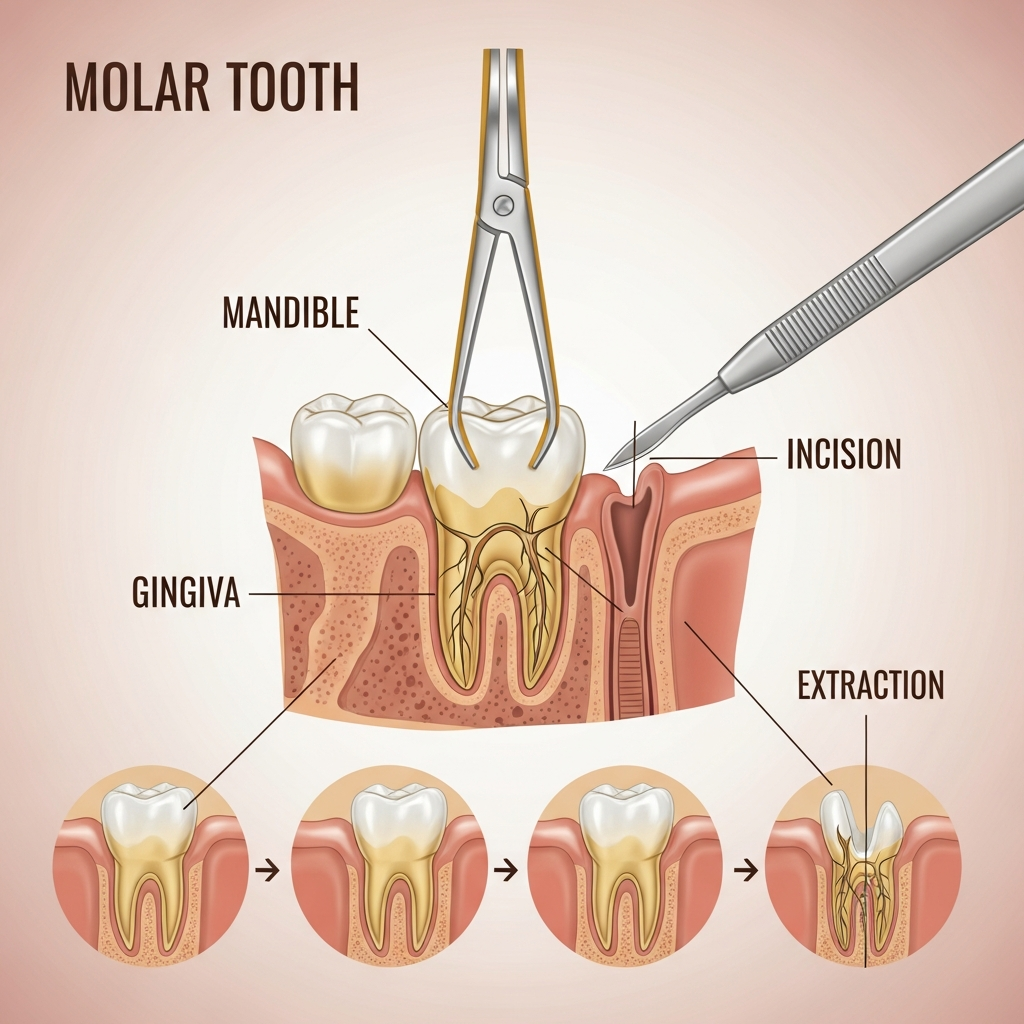
Wisdom teeth — or third molars — are the last teeth to erupt, typically appearing between the ages of 17 and 25. For some people they emerge without any problems. For many others, however, wisdom teeth become a source of significant pain, infection, and dental complications that require surgical removal.
In India, a high proportion of adults experience impacted wisdom teeth — teeth that do not have enough space to fully emerge into a functional position. Left untreated, impacted wisdom teeth can damage neighbouring teeth, cause recurring gum infections, promote cyst formation, and destabilise your entire bite.
At Dental Wellness Bathinda, our oral surgeons perform wisdom tooth extractions — from straightforward simple extractions to complex surgical removals — with precision, comfort, and thorough post-operative care. This guide tells you everything you need to know before making your decision.
What Are Impacted Wisdom Teeth?
A wisdom tooth is described as "impacted" when it cannot fully break through the gum due to lack of space in the jaw. Impaction can take several forms:
🦷 Mesial Impaction
The most common type. The tooth is angled forward toward the front of the mouth, pressing against the second molar. Causes the most complications if untreated.
🦷 Vertical Impaction
The tooth is upright but cannot fully emerge through the gum. May eventually erupt on its own or may require removal if causing repeated infection.
🦷 Horizontal Impaction
The tooth lies completely sideways, pointing directly into the adjacent molar. This type almost always requires surgical removal.
🦷 Distal Impaction
The tooth angles toward the back of the mouth. Less common but still potentially problematic, often requiring extraction depending on the degree of angulation.
7 Clear Signs You Need Wisdom Tooth Removal
1. Persistent Pain at the Back of Your Jaw
Aching or throbbing pain at the very back of your mouth — especially one that radiates to the ear, jaw, or neck — is the most common indicator that a wisdom tooth is causing problems. The pain often worsens at night or when chewing.
2. Swollen, Red, or Bleeding Gums Around the Tooth
A partially erupted wisdom tooth creates a flap of gum tissue (the operculum) that traps food and bacteria underneath. This leads to pericoronitis — an infection of the gum tissue around the tooth — causing swelling, redness, bad taste, and sometimes difficulty opening your mouth (trismus).
3. Recurrent Infections
If you have had 2 or more episodes of pericoronitis around a wisdom tooth, removal is strongly recommended. Repeated infections cause progressive damage to surrounding bone and increase risk of spreading to deeper spaces in the neck.
4. Damage to the Adjacent Second Molar
A mesially impacted wisdom tooth presses against the roots of the second molar, causing a specific pattern of decay called "distal caries" on the second molar. Without intervention, this can lead to loss of both teeth.
5. Cyst or Tumour Formation
An unerupted wisdom tooth can develop a fluid-filled cyst (dentigerous cyst) around the crown. These cysts grow slowly but can destroy significant bone and may displace adjacent teeth, making early removal critical.
6. Crowding and Bite Changes
Some evidence suggests that erupting wisdom teeth contribute to crowding of the front teeth, particularly in younger adults. If you have had orthodontic treatment and notice your teeth shifting, consult your dentist about your wisdom teeth.
7. Difficulty Cleaning the Tooth
Wisdom teeth sit at the very back of the mouth and are inherently difficult to clean. When decay has progressed to the pulp of a wisdom tooth and root canal treatment is not practical due to the tooth's position, extraction is the most practical solution.
The Wisdom Tooth Removal Procedure at Dental Wellness Bathinda
Consultation & OPG X-Ray
A panoramic (OPG) dental X-ray shows the position, angulation, and root anatomy of all wisdom teeth. This is the most important step in surgical planning — it determines the complexity of the extraction and helps us anticipate any proximity to the inferior alveolar nerve.
Local Anaesthesia
The area around the tooth is thoroughly numbed with local anaesthetic. We ensure complete numbness before proceeding. For particularly anxious patients, we discuss additional sedation options to ensure you feel comfortable throughout.
Surgical Access (if Impacted)
For impacted wisdom teeth, a small incision is made in the gum to expose the tooth and bone. In some cases, a small amount of surrounding bone is carefully removed to allow access to the tooth. For simple (fully erupted) extractions, this step is not necessary.
Tooth Removal
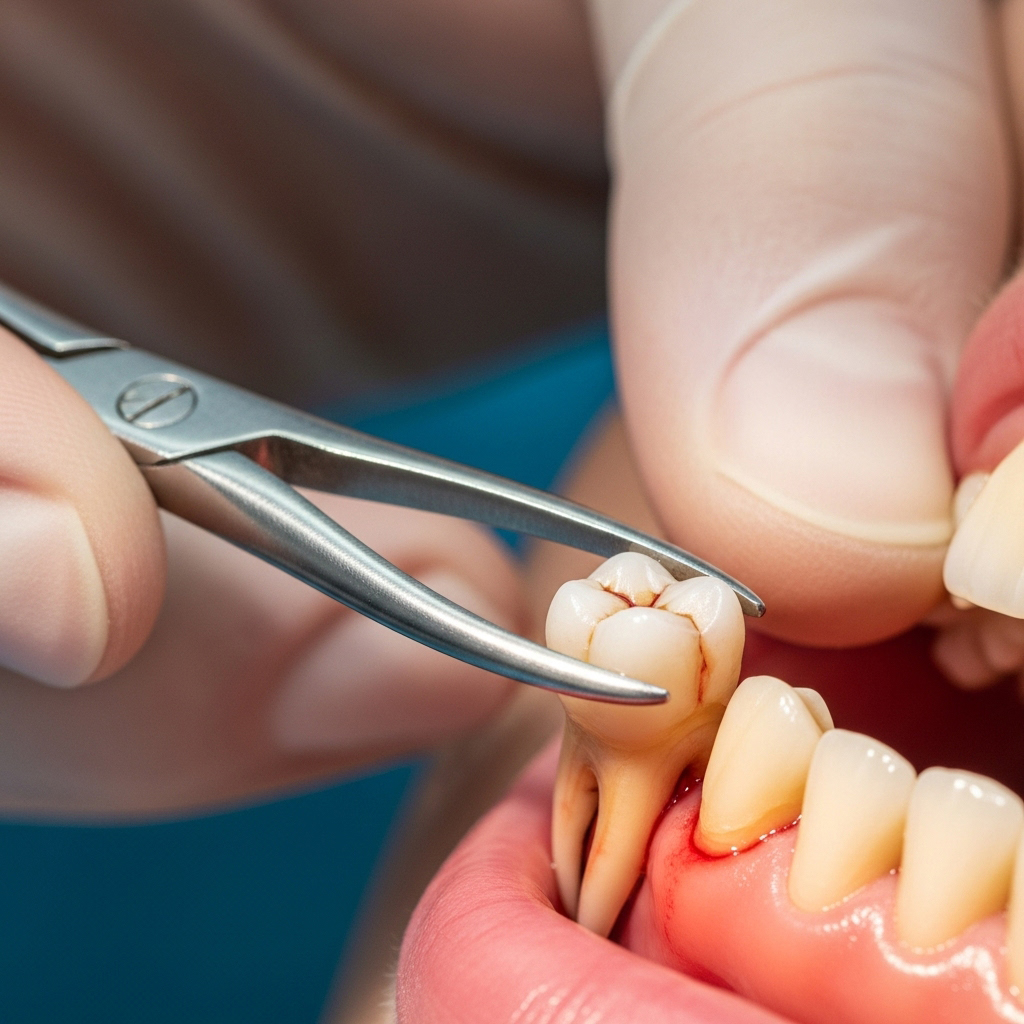
The tooth is sectioned (divided into pieces) if needed to minimise the amount of bone that must be removed. Each section is carefully elevated and removed. The socket is thoroughly cleaned and irrigated.
Closure & Post-Operative Instructions
The gum is sutured closed (stitches dissolve on their own in 7–10 days). You receive detailed post-operative instructions, prescribed medication, and our surgeon's direct contact for any concerns during recovery.
Recovery Guide: Day by Day
Day 1 — Clot Formation (Critical)
Bite firmly on the gauze placed by your surgeon for 30–45 minutes after the procedure. A blood clot will form in the socket — this clot is essential for healing. Avoid rinsing, spitting forcefully, or using a straw, as these actions can dislodge the clot.
Days 2–3 — Peak Swelling
Swelling and bruising around the jaw and cheek typically peak on Day 2–3. Apply an ice pack (20 minutes on, 20 minutes off) for the first 24 hours. After 48 hours, switch to gentle warm compresses to reduce lingering swelling. Stick to soft foods — curd, khichdi, soft dal, mashed vegetables.
Days 4–7 — Healing Begins
Most of the discomfort resolves by Day 4–5. You can gradually return to a more normal diet. Begin gentle warm salt water rinses 3–4 times daily from Day 2 onwards to keep the socket clean.
Week 2 — Stitches & Follow-Up
If non-dissolving sutures were placed, they are removed at your follow-up appointment (usually Day 7–10). The socket continues to fill with new tissue over the following weeks.
What to Avoid
- Smoking or tobacco for at least 72 hours (it triples the risk of dry socket)
- Alcohol for 48 hours
- Hot, spicy, or hard-crunchy foods for the first week
- Touching the socket with your tongue or fingers
- Strenuous exercise for the first 2–3 days
✨ Conclusion
Wisdom teeth are one of nature's more inconvenient evolutionary legacies. When they cause problems — and statistically, they often do — prompt professional evaluation and timely removal is the best decision you can make for your long-term oral health.
At Dental Wellness Bathinda, our experienced oral surgeons make wisdom tooth removal as comfortable and straightforward as possible. If you have been experiencing pain, swelling, or repeated infections at the back of your jaw, do not wait for the situation to worsen.
Book your consultation today, get a clear diagnosis, and make an informed decision — with our team supporting you every step of the way.
❓ Frequently Asked Questions
When the tooth is impacted, causing infection, damaging adjacent teeth, forming cysts, or causing recurrent gum problems.
The procedure is done under local anaesthesia — no pain during surgery. Post-operative soreness is managed with medication and typically resolves within 3–5 days.
Most patients feel normal within 3–5 days. Complete healing takes 2–4 weeks for soft tissue and several months for bone.
Yes, this is possible in one appointment. Our surgeon will advise based on your specific case and health status.
Dry socket occurs when the healing blood clot is lost from the extraction site, causing pain and delayed healing. It is easily treated at the clinic.
Cost depends on the complexity. Contact Dental Wellness Bathinda for a detailed assessment and transparent quote.